Shipping Car From Toronto To Calgary - Costs, Process & Methods
Need help shipping car from Toronto to Calgary? Find out the best methods, pricing, and process details in our complete guide.
Fill out the form above and receive a free quote today!
Have questions? Call us at +1 (888) 370-1041. You’ll speak directly with our
U.S.-based team—no overseas call centers or scripted runaround.
· Updated February 16, 2026
With over 25.7 million vehicles registered across Canada as of 2023, shipping cars between major cities like Toronto and Calgary have become increasingly common. While shipping car from Toronto to Calgary services may appear challenging at first, understanding the process can make your vehicle's 3,500-kilometer journey smoother and more cost-effective.
Get a Quote
The cost of shipping a car from Toronto to Calgary will typically be CAD 0.5 per km. For a 3,500 km distance, the starting price for a standard sedan would be $1,750.
Vehicle Type
Size Premium
Distance Cost
Total Cost (CAD)
Car
$0
$1,750
$1,750
SUV
$200
$1,750
$1,950
Pickup
$400
$1,750
$2,150
Small RV
$600
$1,750
$2,350
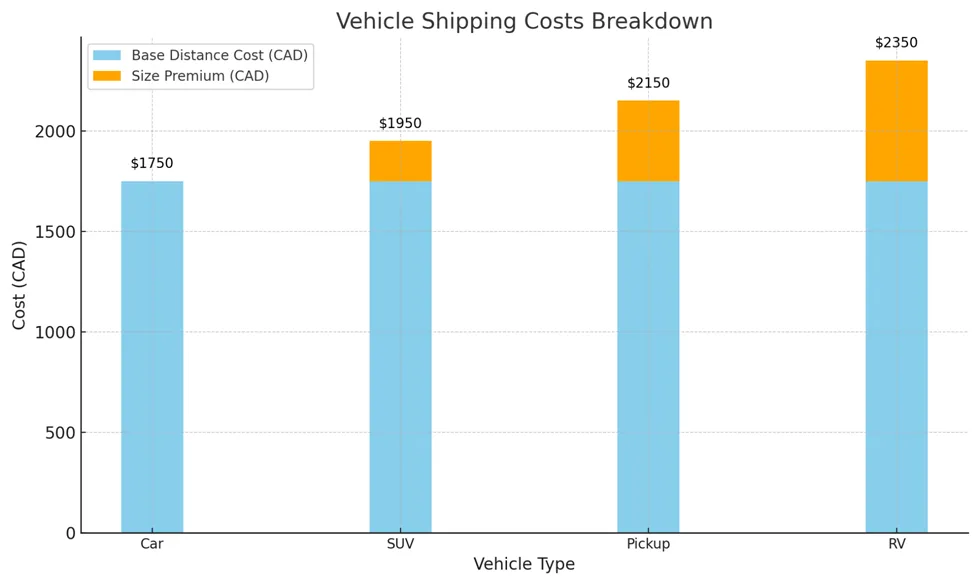
Each row adds another $200 premium for the larger vehicle size, while the base distance cost remains the same at $1,750 (3500 km × $0.5/km). Here’s the visual representation of how costs increase with the increase in vehicle size.
3 Methods For Moving Car From Toronto To Calgary:
Auto shipping companies in Canada offer several methods of transporting your vehicle, with truck transport being one of the most popular choices. Let's explore different methods to see which one suits you best.
Call Now
Method#1 - Car Transport By Rail
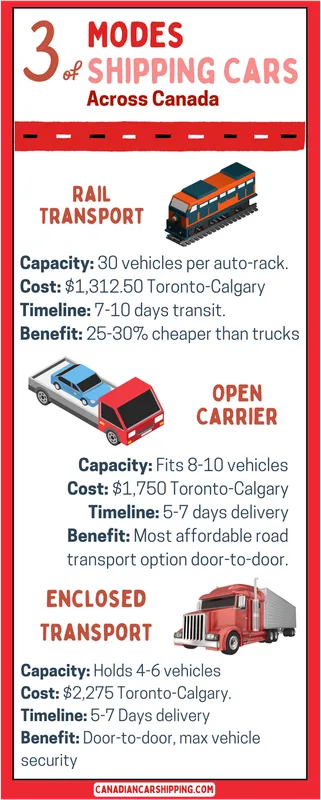
Rail transport presents a systematic approach to car shipping that combines efficiency with cost-effectiveness. This method has become increasingly popular for those seeking reliable vehicle transportation across Canada's vast distances.
Cost Component
Amount (CAD)
Toronto to Calgary
$1,312.50
Average Terminal Fee
$75–150
Local Transport to Terminal
$100–200
Technical Specifications
Railway companies utilize specialized equipment for moving vehicles:
Auto-rack cars feature bi-level or tri-level configurations
Each railcar accommodates 8-10 vehicles per level
Maximum capacity reaches 30 vehicles per auto-rack
Rail transport offers several benefits that make it attractive for long-distance vehicle transport:
Cost savings of 25-30% compared to truck transport
Reduced carbon footprint through shared transportation
Consistent departure schedules from major terminals
Comprehensive vehicle inspection protocols
Real-time tracking systems
Disadvantages
Consider these limitations when choosing rail transport:
Terminal-only access points require additional local transport
Transit times typically range from 7-10 days
Limited flexibility for pickup and delivery times
Size restrictions may exclude modified vehicles
Weather-dependent loading schedules
Best Usage Scenarios
Rail transport proves most beneficial under these circumstances:
Standard-sized vehicles within railway clearance limits
Locations near major rail terminals
Flexible delivery timeframes
Budget-conscious transportation needs
Environmental impact considerations
Vehicle Type
Suitability
Notes
Sedans
Excellent
Perfect fit for rail transport
SUVs
Good
Check height restrictions
Modified Vehicles
Limited
May exceed size limits
When considering this method of transportation, you'll need to coordinate with local transport services for terminal access. The total journey combines rail transit with short-distance trucking, creating a comprehensive solution for vehicle transport needs.
Call Now
Book your rail transport well in advance, as schedules fill quickly during peak moving seasons. Most carriers require booking at least two weeks before your intended shipping date.
Method#2 - Open Carrier Shipping
Open carrier shipping provides a practical solution for those considering moving their vehicle from Toronto to Calgary. This method balances cost with convenience, making it popular for car shipping.
Cost Breakdown
Amount (CAD)
Notes
Toronto to Calgary
$1,750
Standard vehicle size
Additional Insurance
$100-300
Optional GAP coverage
Peak Season Surcharge
$150-250
May-September
Technical Specifications
Open carriers utilize specialized equipment designed for efficient vehicle transport:
Loading capacity 8-10 vehicles
Hydraulic ramps
Multi-level storage configurations
Safety restraints at different anchor points
Advantages
Open carrier transport offers several benefits that make moving vehicles efficient:
Door-to-door service saves time and effort
Flexible pickup and delivery scheduling options
Regular departure times throughout the week
Competitive pricing due to high availability
Quick loading and unloading procedures
Disadvantages
Consider these factors when choosing open-carrier shipping:
Vehicles exposed to weather conditions during transit
Possible road debris contact
Transit times vary based on route conditions
Ideal Usage Scenarios
Open carrier shipping works best under these circumstances:
Daily-use vehicles requiring standard transport
Flexible delivery windows within 5-7 days
Standard insurance coverage needs
Non-specialty vehicles under 2,500 kg
Budget-conscious transportation requirements
Timing plays a crucial role when planning your vehicle transport. Summer months typically see higher demand for shipping across Canada, affecting availability and pricing. Early booking ensures better rates and preferred scheduling options.
Method#3 - Enclosed Carrier Transport
Enclosed carrier transport provides maximum protection for those moving cars from Toronto to Calgary with valuable vehicles. Auto shipping companies in Canada consider this their premium service tier.
Cost Component
Amount (CAD)
Toronto to Calgary
$2,275
Climate Control Option
$200–400
Premium Insurance
$150–300
Technical Specifications
Enclosed carriers use specialized equipment for secure transport:
Advanced hydraulic lift gates for careful loading
Climate-controlled environments for vehicle protection
Maximum capacity of 4-6 vehicles per carrier
Air-ride suspension systems
Eight-point tie-down system per vehicle
Advantages
Enclosed transport offers several premium benefits:
Complete protection from weather and road elements
Enhanced security throughout transit
Premium service with dedicated coordinators
Advanced vehicle monitoring systems
Specialized handling procedures
Disadvantages
Consider these limitations when choosing enclosed transport:
Higher cost compared to other methods
Limited carrier availability for scheduling
Extended waiting periods for service
Strict scheduling requirements
Smaller vehicle capacity per transport
Best Usage Scenarios
Enclosed transport proves most beneficial under these circumstances:
Luxury and exotic vehicle transportation
Classic or vintage car moving
High-value vehicle protection needs
Weather-sensitive transportation requirements
Premium service level expectations
When booking enclosed transport, plan for at least three weeks. Due to limited availability, these specialized carriers require longer lead times.
Premium insurance coverage comes standard with enclosed transport, typically offering protection up to $250,000 with options for increased coverage.
3 Step Process to Transport a Vehicle From Toronto to Calgary Using Auto Carrier:
Canadian Car Shipping offers free quotes with no obligation to you, so why not get a rough estimate and see if your budget allows car shipping via truck, which is a much more convenient and hands-off way to move vehicles? So, to do that, you just need to follow 3 super simple steps:
Step#1. Get a Quote Using Our Free Car Shipping Quote Calculator
Go to our free car shipping quote calculator page and enter your contact info, such as name, email, and phone number (we do not ask for personal information). This information is just for you to receive the quote. We don't spam and respect your privacy, so you don't have to worry about getting random emails from us.
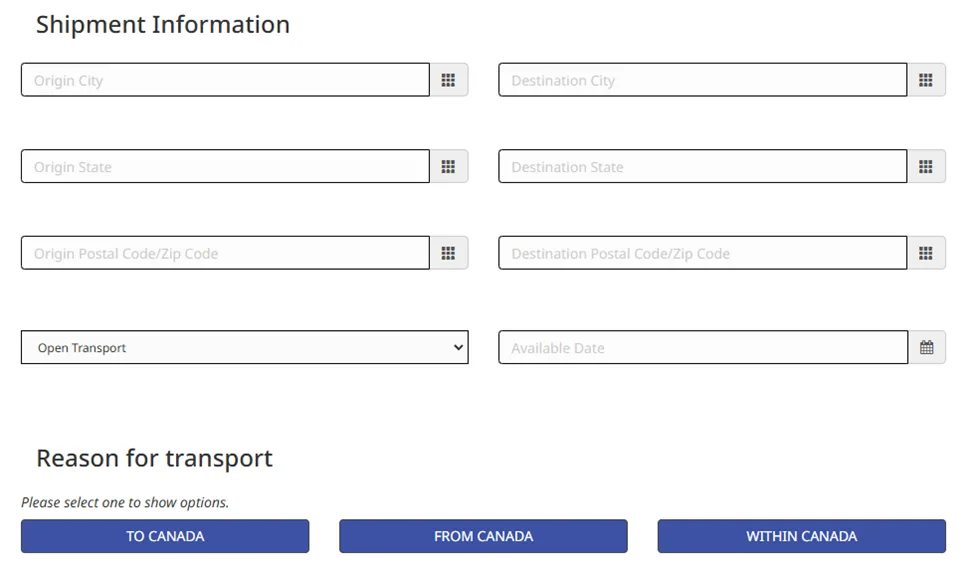
Next, you need to provide us with the shipment details, such as pickup and drop points, and the type of transport, such as open or enclosed. Since you're shipping the vehicle within Canada, make sure to select 'Within Canada' as the reason for transport.
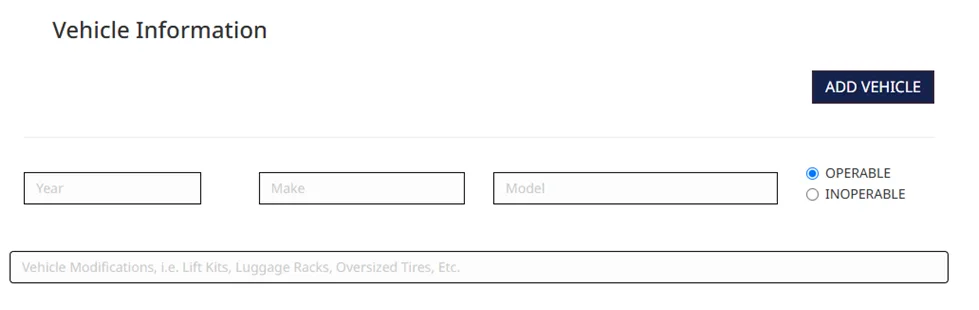
Lastly, you need to enter your vehicle details, such as year, make, model, operational status, and any modifications to the vehicle. If shipping multiple cars, click ‘Add Vehicle’ to add another car.
Step#2. Receive the Quote & Book The Shipment
Our team will quickly send you a free, no-obligation quote that outlines your cost, service type, and other details.
If you opt to work with us, you can book the shipment and be prepared for the carrier to pick up the car during the pickup window.
Call Now
Ensure the vehicle is prepared before shipping, such as cleaned and inspected by a mechanic for any faults and any expensive items removed from the car, such as jewelry or important documents. The carrier will inform you before arriving so you have enough time to prepare.
Step#3. Receive & Inspect The Car At The Destination
The carrier inspects the car at the pickup point, prepares a report, and takes off with the vehicle. Next, you will be notified of the carrier's arrival at the destination. Be ready, or designate someone for the car drop-off if you're unavailable.
They will inspect the car’s condition and match it with the inspection report before pickup to ensure no new damages are found. Once they have done this, the process will be complete.
How Long Does It Take to Ship a Car From Toronto to Calgary?
Car transport from Toronto to Calgary typically takes 3-7 days, with several factors influencing the exact duration:
Key Factor
Impact on Shipping Time
Distance (3,500 km)
Base transit time: 3 days minimum
Weather Conditions
Can add 1-2 days in winter
Route Stops
Multiple pickups may add 1 day
Border Crossings
Not applicable (domestic route)
Weather is crucial along this route, especially through the Prairie provinces. Shipping vehicles during winter can extend delivery times, while summer usually offers more predictable schedules.
Daily Distance Breakdown
Average daily distance covered: 800-1,000 km.
Required driver rest stops: Every 8-10 hours (the Government of Canada mandates rest after 13 hours of driving in 24 24-hour periods)
Typical overnight stops: 2-3 locations
Pro tip: Book your shipment mid-week for optimal timing. Weekend departures might extend the overall duration due to reduced operations at terminals.
5 Considerations When Hiring Toronto To Calgary Auto Shipping Companies In Canada
When shipping cars from Toronto to Calgary, selecting the right auto transport company can make a huge difference, so pay attention to these 5 considerations.
Factor
Key Questions to Ask
License & Insurance
Are they licensed and insured? What’s covered?
Service Agreement
Are timelines, costs, and damage policies clearly defined?
Vehicle Protection
How do they secure and track vehicles during transport?
Company Experience
Do they have experience on the Toronto–Calgary route?
Clear Pricing
What’s included in the price? Are there hidden fees?
Let’s discuss each of these factors in detail below:
1. License & Insurance
Ensuring your chosen company has valid licensing and insurance is critical for a smooth and legal transport experience. A licensed company adheres to government regulations and can legally move vehicles across provinces. Insurance is equally important, as it protects your car in case of accidents or unexpected damage during transit.
Confirm their transport license with local or federal authorities.
Confirm they can legally operate in both countries if cross-border moving is involved.
2. Service Agreement
A clear, written agreement avoids misunderstandings and ensures all parties know their responsibilities. Always review the contract and clarify terms before signing.
Ensure pickup and delivery timelines are documented clearly.
Understand their cancellation policy—fees or penalties may apply.
Know what the service includes, from loading to final delivery.
Ask what happens in case of delays or car damage.
Keep a copy of the signed agreement for future reference.
3. Vehicle Protection
Protecting your car during transport is a top priority. Professional companies use various methods to secure your vehicle and ensure it arrives safely at its destination.
Ask about transport methods, like enclosed or open carriers.
Ensure the company conducts a detailed inspection before car shipping.
Check if they provide GPS tracking or carrier contact details.
Understand their protocol for securing vehicles on the carrier.
Get the contact information for emergencies during transit.
4. Company Experience
Experience matters in the vehicle transport industry. A company with a solid track record will likely provide reliable and professional service.
Look for companies with at least five years of experience.
Read reviews on platforms like Google or BBB to gauge customer satisfaction.
Ask about their specific expertise on the Toronto-Calgary route.
Review their accident and claims history for peace of mind.
Request references from past clients who have used their services.
5. Clear Pricing
Transparent pricing helps you budget effectively and avoid unexpected costs. A reliable company will provide a detailed quote that outlines all expenses.
Request a breakdown of the base price and extra fees.
Understand what’s included, such as fuel, tolls, and insurance.
Know the payment terms—some companies may require deposits.
Ask if they use electronic logging devices (ELDs) to track mileage.
Confirm any cancellation or rescheduling fees upfront.
When moving a car from Toronto to Calgary, vetting auto transport companies thoroughly can save you from unnecessary stress and expenses.
5 Tips to Save on Your Car Transport From Toronto to Calgary:
1. Time Your Booking Strategically
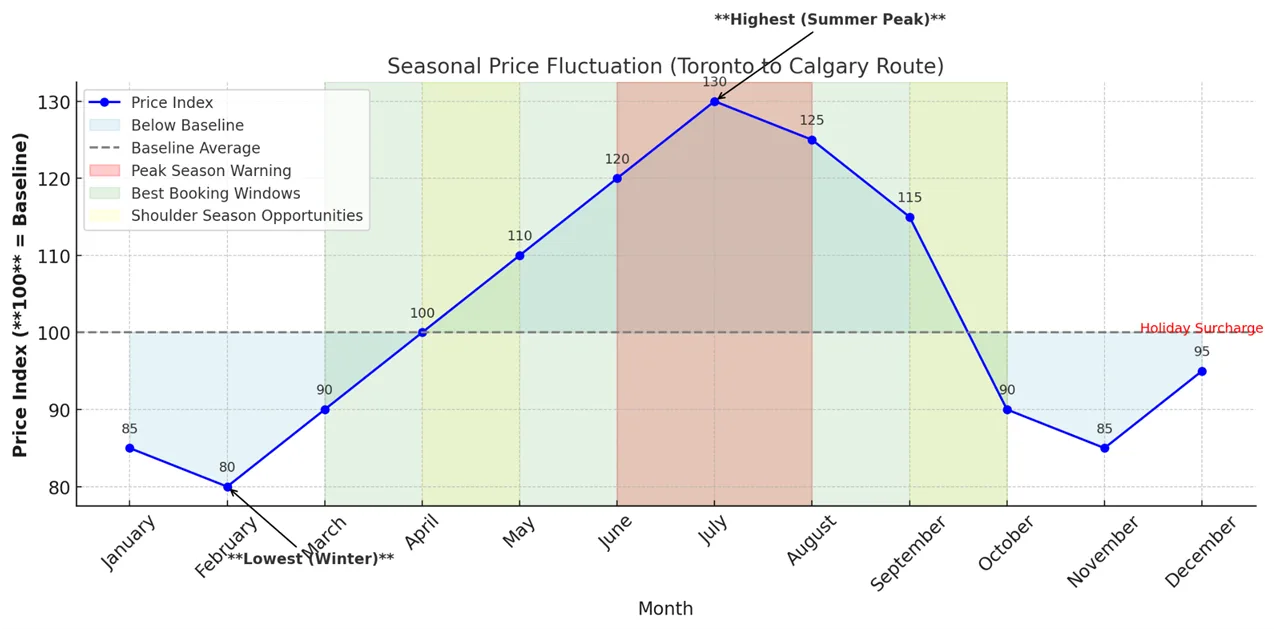
We’ve noticed that shipping rates fluctuate seasonally in the Canadian car shipping industry. Off-peak lows in demand from October to March offer rates 10-20% below baseline (standard rates), particularly from January to February.
Summer is the peak season from June to August, so it's also the priciest period. Rates spike by 20-30%, with July being the most expensive.
Due to demand, holiday season rates (December) show a 15-25% increase. We recommend booking 2-4 weeks in advance during this season to offset high rates during peak and holiday times.
Weather impacts are notable, with icy roads in January-February potentially adding route-specific premiums, while rates rise back to baseline during the spring thaw (March-April) as conditions improve.
So, in short, October to March (except the holiday season) is the best time to ship a car if you’re tight on budget but are not time-bound, as some delays during winter can be experienced.
Here's a sample graph based on our observations that visualizes the low- and high-demand patterns of car shipping in Canada throughout the year.
2. Terminal-to-Terminal Shipping
Terminal-to-terminal service stands out as a smart choice when car moving across Canada. You'll typically save between 10-25% compared to door-to-door delivery. Consider these practical aspects of terminal shipping:
Storage fees range from $10-30 per day if you can't pick it up immediately
Public transit and rideshare services can offset terminal commute costs
Carriers often offer discounts when multiple vehicles ship from one terminal
3. Flexible Delivery Windows
Open or extended delivery windows may result in an additional 5-10% price reduction, but not every carrier offers this option.
This benefit is usually present when schedules are all booked, and some deliveries require faster moves, so delaying yours to accommodate the carrier may get you some money off.
4. Ask for Discounts:
You may get a discount if you’re a Forcers member, AAA member, disabled person, etc. So try asking for this. Also, shipping multiple vehicles can get you some price off in different situations, including:
2 vehicles: 5% discount per vehicle
3+ vehicles: 10% discount per vehicle
5. Payment & Booking Strategies
Smart booking and payment choices can lead to significant savings when moving your vehicle:
Strategy
Potential Savings
Early Booking (2+ weeks ahead)
5% off total cost
Cash/Debit Payment
3% discount
Pro tip: Combine these strategies during off-peak seasons to maximize your savings. Many carriers offer additional discounts during slower months, particularly in spring and fall.
Seasonal Logistics and Transport Price Fluctuation In Canada:
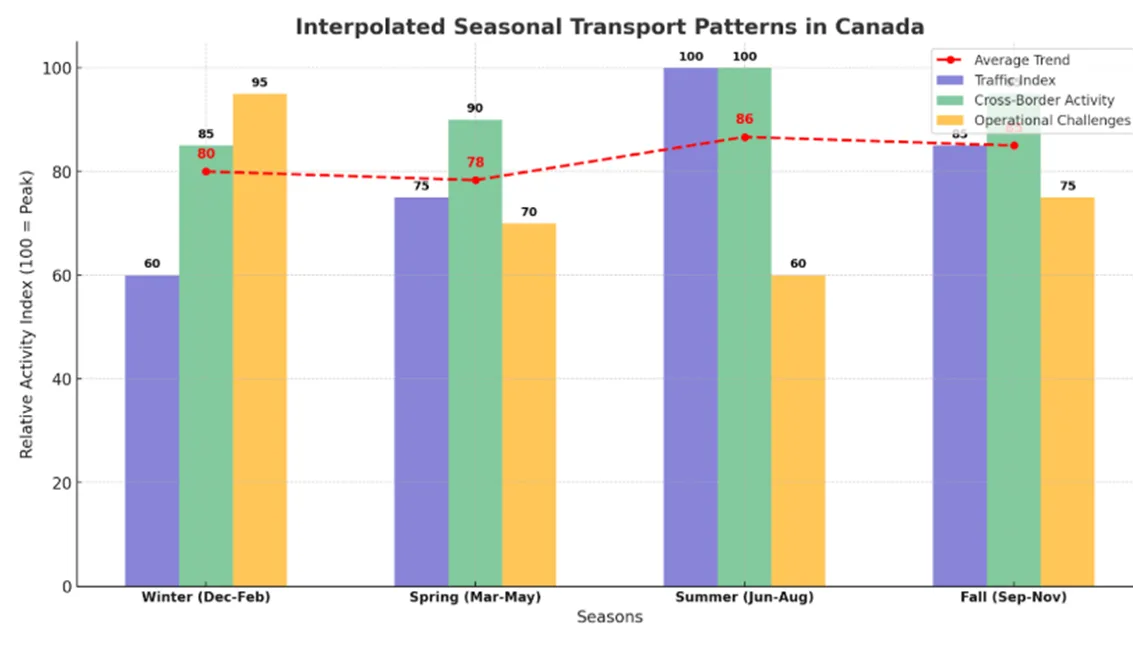
Based on our industry experience, we’ve already discussed that the October to March season is the best for car shipping if you want low rates. Here’s the data we got from Transport Canada. We used interpolation to draw a graph of likely seasonal trends. The result is not far from what we’ve already observed in the industry:
Seasonal trends in car transport reflect distinct variations in traffic, costs, and operational challenges.
Winter (Dec–Feb) sees the lowest traffic (60% of peak) but the highest operational challenges (95%) due to harsh weather. Lower demand results in reduced base rates but longer transit times.
Spring (Mar-May) brings moderate traffic (75%), improved reliability, and increased activity as summer approaches.
The peak season (Jun–Aug) experiences the highest traffic (100%) and demand, leading to premium pricing but optimal reliability and service availability. Fall (Sep–Nov) sees strong yet declining activity (85%), rising weather challenges (75%), and increased cross-border demand, particularly from snowbird routes.
If delays are acceptable, October through March offers the best value, while April–May and September balance moderate pricing with reliability.
Key Takeaways Based on Data:
Optimal Value Period: October through March, if you can accommodate potential weather-related delays
Peak Cost Period: June through August, with maximum service availability
Best Balance: April-May and September offer moderate pricing with reliable service levels
Disclaimer:
The seasonal patterns presented in this analysis are derived through interpolating verified transportation data from Transport Canada's 2020 Transportation Report. Get a Quote
This interpolation methodology uses the following proxy indicators:
Verified Base Data:
22% decrease in motor vehicle rail shipments (2020)
8% decline in cross-border trucking movements (10.1 million 2-way movements)
Urban mobility patterns in major Canadian corridors
Documented weather impacts on transportation systems
Interpolation Methodology:
Relative indices are created using peak activity periods as baseline (100)
Seasonal variations are interpreted from general transportation patterns
Operational challenges are assessed based on documented weather and infrastructure impacts
Limitations:
The patterns shown are interpretive rather than direct measurements
Actual auto transport seasonality may vary from general transportation trends
Local and regional variations may not be fully represented
Canadian Car Shipping Simplifies Complicated Logistics With Affordable Auto Transport:
At Canadian Car Shipping, we believe in removing the hassle of auto shipping and providing peace of mind to our customers, which is evident from our flawless A+ rating on BBB.
With comprehensive door-to-door service, transparent pricing, and real-time tracking available, moving your car from Toronto to Calgary has never been more straightforward.
Whether you choose enclosed or open-air transport, professional auto carriers ensure your vehicle reaches its destination safely while you focus on what matters most - your journey ahead.
Fill out the form above and receive a free quote today!
Have questions? Call us at +1 (888) 370-1041. You’ll speak directly with our
U.S.-based team—no overseas call centers or scripted runaround.
Close this quote form?
Don't worry — your answers will stay here unless you leave the page.



 Next, you need to provide us with the shipment details, such as pickup and drop points, and the type of transport, such as open or enclosed. Since you're shipping the vehicle within Canada, make sure to select 'Within Canada' as the reason for transport.
 Lastly, you need to enter your vehicle details, such as year, make, model, operational status, and any modifications to the vehicle. If shipping multiple cars, click ‘Add Vehicle’ to add another car.
 Seasonal trends in car transport reflect distinct variations in traffic, costs, and operational challenges.
Winter (Dec–Feb) sees the lowest traffic (60% of peak) but the highest operational challenges (95%) due to harsh weather. Lower demand results in reduced base rates but longer transit times.
Spring (Mar-May) brings moderate traffic (75%), improved reliability, and increased activity as summer approaches.
The peak season (Jun–Aug) experiences the highest traffic (100%) and demand, leading to premium pricing but optimal reliability and service availability. Fall (Sep–Nov) sees strong yet declining activity (85%), rising weather challenges (75%), and increased cross-border demand, particularly from snowbird routes.
If delays are acceptable, October through March offers the best value, while April–May and September balance moderate pricing with reliability.
Key Takeaways Based on Data:
Seasonal trends in car transport reflect distinct variations in traffic, costs, and operational challenges.
Winter (Dec–Feb) sees the lowest traffic (60% of peak) but the highest operational challenges (95%) due to harsh weather. Lower demand results in reduced base rates but longer transit times.
Spring (Mar-May) brings moderate traffic (75%), improved reliability, and increased activity as summer approaches.
The peak season (Jun–Aug) experiences the highest traffic (100%) and demand, leading to premium pricing but optimal reliability and service availability. Fall (Sep–Nov) sees strong yet declining activity (85%), rising weather challenges (75%), and increased cross-border demand, particularly from snowbird routes.
If delays are acceptable, October through March offers the best value, while April–May and September balance moderate pricing with reliability.
Key Takeaways Based on Data: