
What Exactly Is Cross Border Customs in Car Shipping?
The movement of goods or vehicles from one country to private country is governed by cross-border customs meaning. Customs requirements differ from one destination country to another but involve a paperwork trail, inspections, and compliance with local and international trade regulations. Customs processes for vehicle shipping include matters like permits, clearance requirements, duty payments, and inspections to allow entry. Such processes will ensure that your vehicle satisfies the regulations of the destination country and is authorized to enter and exit. Cost management enables you to prepare the right document and get adherence so that there is no fine or extra cost.A Closer Look at International Customs for Car Shipping
While border customs and clearance can be a tricky affair, you're not gone be caught off-guard! Below, we’ll look closer at the custom process and the paperwork you’ll need, how it works and what influences the cost of shipping your vehicle below.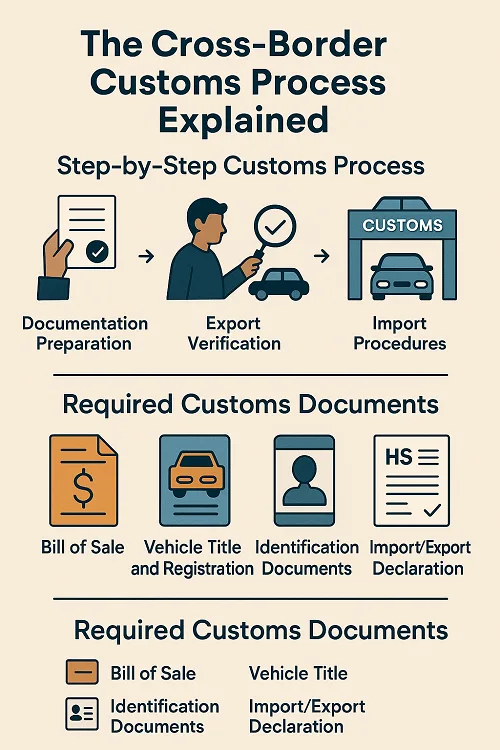
1. Documents Required for Cross Border Customs
To fulfill customs requirements, any kind of car, be it a used or a new one, will need several documents. These papers affirm your ownership of the car and show that it adheres to the rules of the shipping and receiving countries.Ownership Verification
To confirm that you’re the legitimate owner of the car being shipped, you will need a vehicle title or registration. The BOL is one of the most important documents for shipping across the border.Declaration forms for customs
Each nation necessitates the completion of distinct customs declaration forms. These documents contain information about the vehicle Transport, where it’s from, and where it’s going. Depending on the situation, you might also need to give a bill of sale.Identification
To validate the vehicle owner’s identity, you must provide a valid passport, driver’s license, or another government-issued ID.Approval or certification of import
Some countries require you to obtain import approval or vehicle certification, especially if the vehicle was not manufactured in the destination country or does not comply with local environmental standards.2. The clearance of customs and inspections
Before you can take delivery of your car, it must clear customs in the destination country. Customs staff will examine the vehicle as part of the clearance process. Here are the standard procedures involved. Customs agents may conduct a physical inspection of your vehicle to ensure it has the same appearance as what you have supplied in the documentation and for compliance purposes. Importing a vehicle to Brazil often requires paying customs duties and taxes, which are normally calculated based on the motor vehicle cost and insurance (CIF). The level of taxation and type of importation often depend on whether it is a personal or non-personal import. Once officials complete the inspection and you make the payment, customs authorities clear the vehicle and release it for transport to its final destination.3. Expenses Related to International Automobile Transport
Having to pay the shipping fee does not complete the whole picture when it comes to shipping a car. Realistic budget possible with understanding these factors. The amount you must pay to transport your car depends on the transport option (open-air or enclosed), distance, and the size of the car. Customs Fees- Most countries charge import duties, taxes, and/or fees depending on the value of the vehicle. These charges may differ a lot so refer to the regulations of the destination country beforehand. While shipping companies include basic insurance on shipments, you might have to purchase extra insurance on valuable or high-risk vehicles.Comparison of Methods Used for Cross-Border Shipping
When shipping a car across the country, you may need a car shipping company. In comparison, we will discuss the different shipping costs and the level of protection offered by the most common shipping methods.
| Feature | Open-Air Transport | Enclosed Transport |
|---|---|---|
| Cost | More affordable | Higher cost due to added protection |
| Protection | Exposed to weather and road debris | Fully protected from elements and road hazards |
| Speed | Typically faster | May take slightly longer due to fewer carriers |
| Best for | Standard vehicles, budget-conscious | Luxury, classic, or high-value cars |
Cost vs. Protection for Open-Air vs. Enclosed Transport
- Open-air carriers are substantially cheaper, with costs often ranging 30% – 50% less than their enclosed counterparts. enclosed transport will keep almost 100% safe from road debris and weather.
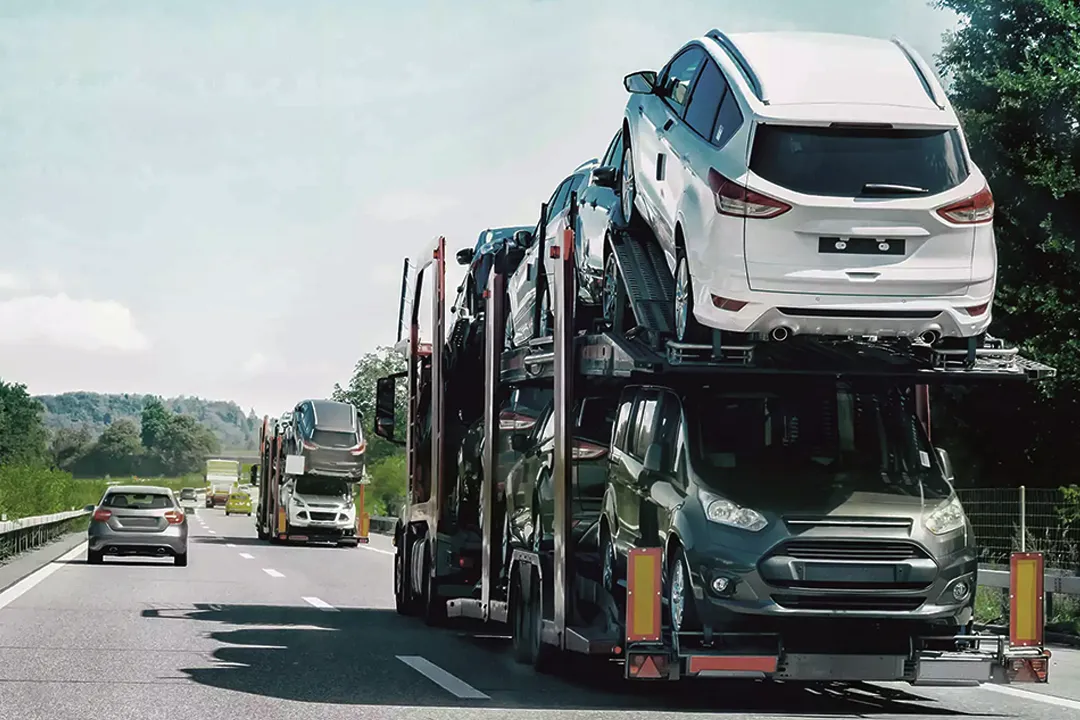
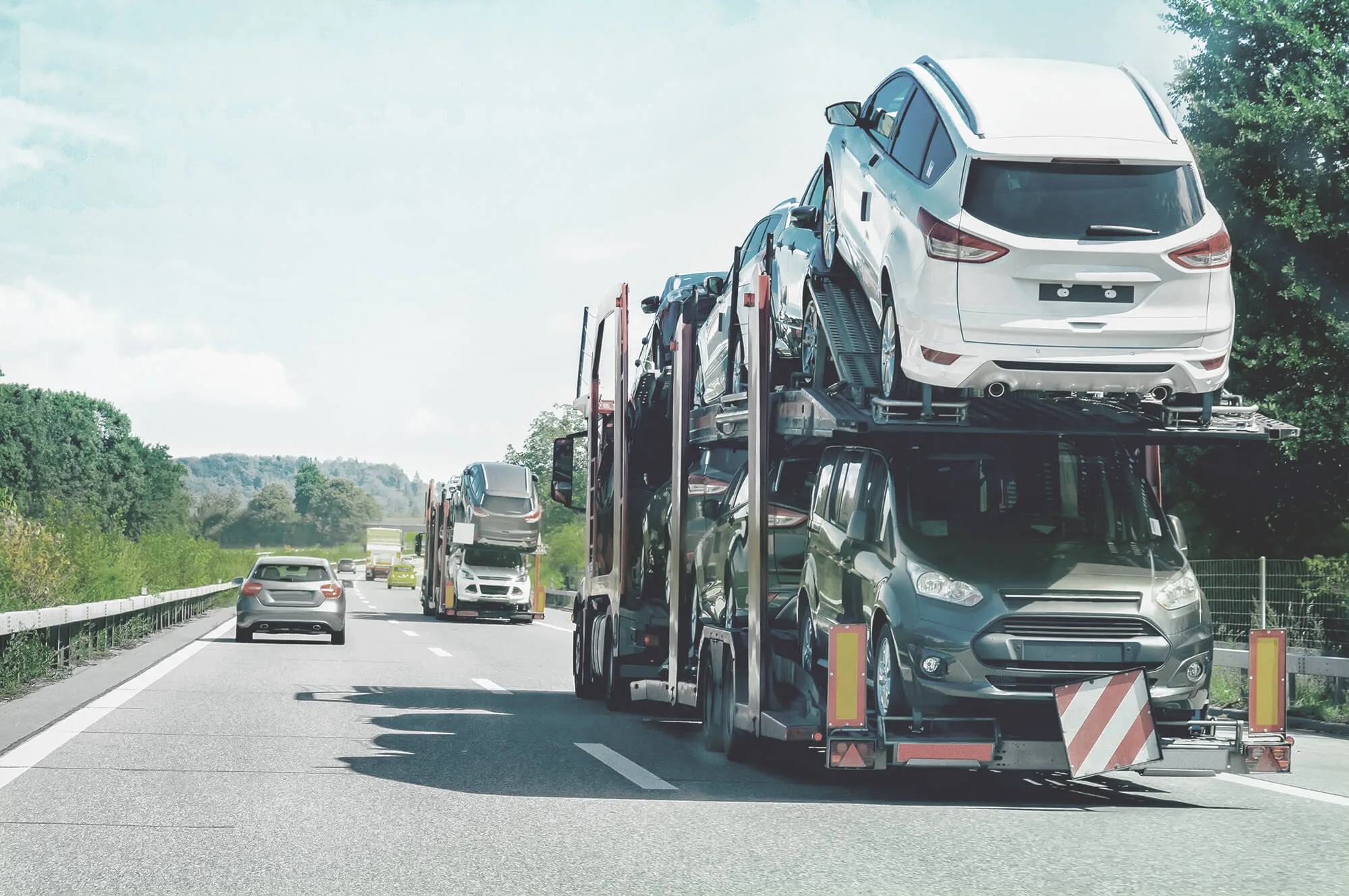
- Conveying your vehicles through the open-air transport from one place to another can expose them to elements like rain, snow, sun, and road dust. Enclosed transport you will find your vehicle covered by a full enclosure trailer, moving garage if you will.
- Enclosed transport is the industry standard for high-value vehicles like luxury, classic, or antique cars as it provides a physical barrier against theft, vandalism and accidental scratches.